
In 1999, the United States was shaken by the tragic Columbine High School shooting in Colorado. After Columbine’s 13 fatalities and 24 injuries, the subject of school safety has remained important as incidents have continued to occur across the country.
For many years, schools and communities relied heavily on a “School Hardening” approach. School Hardening focuses on physical safety measures to protect students and staff from violent incidents.
Today, school safety requires a broader strategy: One which not only includes hardening, but also incorporates safety planning, training, mental health measures, building relationships with students and families, and more.
What is School Hardening?
While specific school hardening measures vary campus to campus, common tactics include:
Locked Doors and Limited Access
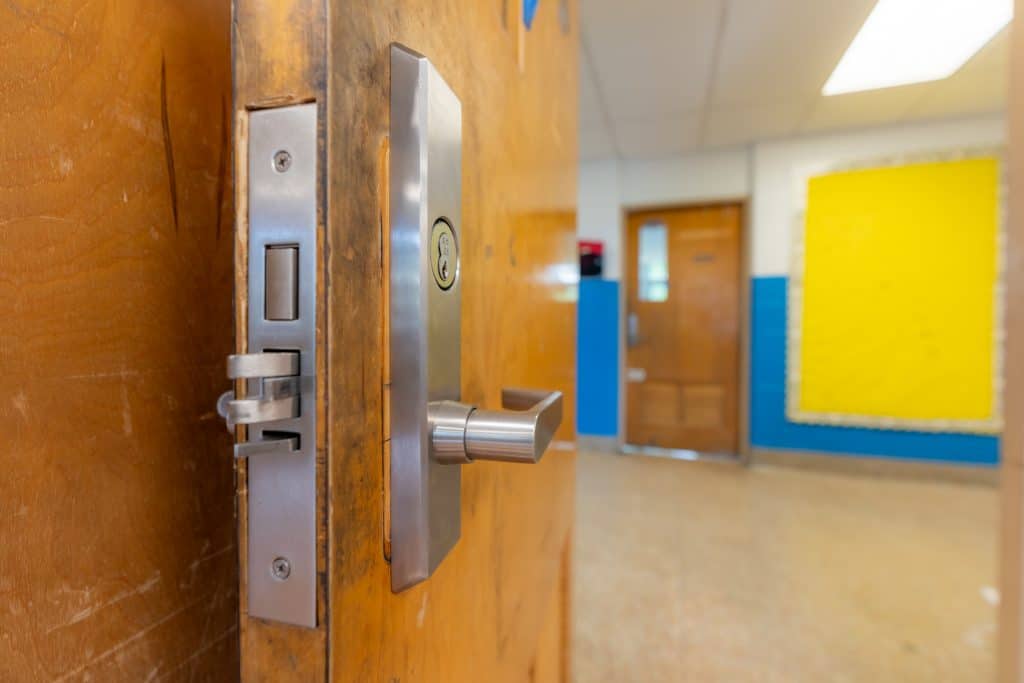
Limiting access to a school building typically involves locking exterior doors. In some cases, the front doors may remain unlocked for visitors to pass through the main office, or an intercom system is available for visitors to request access. School staff may use keys or swipe their badges to enter the building through locked doors.
With a locked door approach, each entryway is manned during student arrival and dismissal. Staff are instructed not to prop doors open during the school day. Inside the school, teachers may be encouraged to lock classroom doors during lessons, or hallway doors may be lockable.
Hardened Corners
As one looks into a classroom from a door or window, any areas that are not visible are known as hardened corners. These are the spaces where room occupants can hide and remain out of sight during a threat. A hard corner strategy uses angles to provide an extra layer of safety by keeping students and staff concealed from plain view.
School Surveillance and Security Cameras
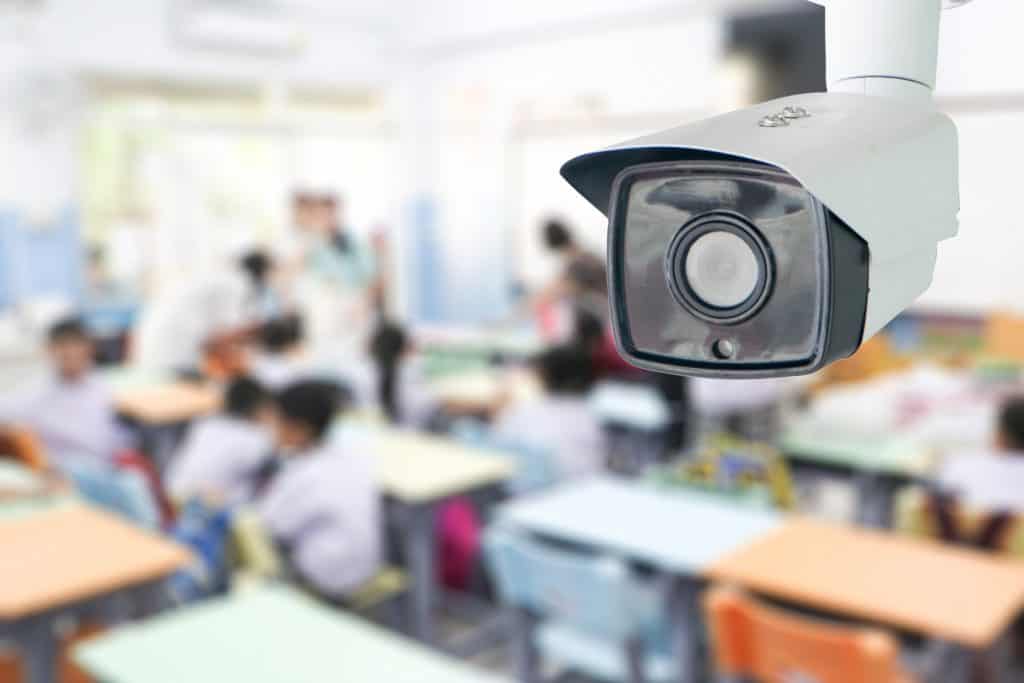
Video surveillance has become increasingly popular on school campuses. The National Center for Education Statistics reports that from the 2009-2010 school year to the 2021-2022 school year, the use of security cameras in schools increased from 61% to 93%.
Many campuses not only have security cameras posted on entryways, but they also have cameras throughout the building in hallways and cafeterias. Some campuses even have cameras in the parking lots. While cameras were once used to review footage after an incident, many cameras now include live feeds to track campus safety and respond appropriately.
Fayette County in KY has utilized L-Tron’s OSCR360 system to document all their security camera locations and views. They have created a virtual walkthrough of their school buildings for safety training purposes and can plan for various incidents/scenarios.
Secure and Tinted Windows
Just as locked doors limit building access, locks are the first step to securing windows. However, normal glass windows are breakable, so schools are turning to shatter-resistant and ballistic glass or protective window films to preserve window integrity. Tinted or mirrored window films also may be used to minimize, or even eliminate, the line of sight into a room or building.
Metal Detectors
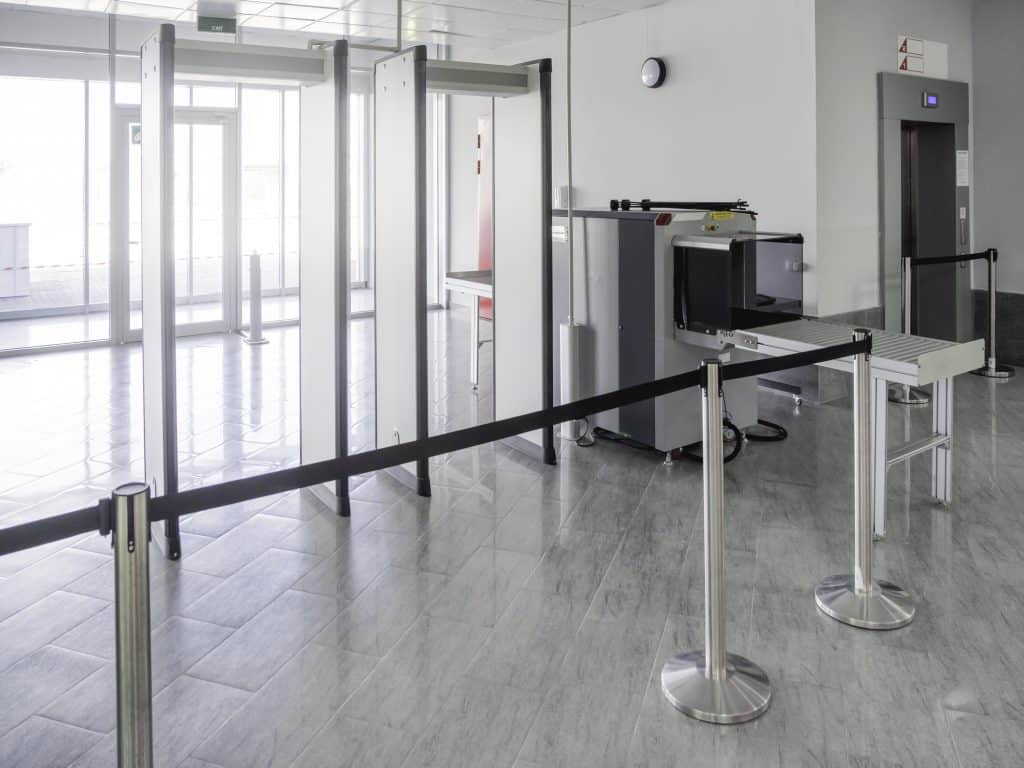
The strategy behind metal detectors is to prevent weapons from entering school buildings. Their expense makes metal detectors less common than other school hardening protocols. At the high school level, the presence of metal detectors is often enough to deter individuals from bringing guns, knives, and other weapons to school.
School Resource Officers (SROs)
School resource officers are sworn law enforcement officers who have received training in school-based policing and crisis response in addition to their patrol officer training. Among other responsibilities, they are trained to respond to threats on campus to prevent injuries and fatalities. School Resource Officers can also provide a positive law enforcement presence in schools and allow students to build familiarity and strong relationships with local police agencies.
School Hardening works alongside Training & Safety Planning
Despite the popularity of some of these school hardening approaches, experts are shifting away from an overreliance on hardening. In an article published by the National Education Association (NEA), school safety expert Ken Trump is quoted, saying, “The most effective school safety strategies are less visible or even invisible compared to trendy, quick-fix fads.”
School safety requires a broader approach: One which not only includes school hardening, but also incorporates safety planning, training programs, mental health measures, building relationships with students and families, and more.
OSCR360 Facilitates Emergency Planning & Training
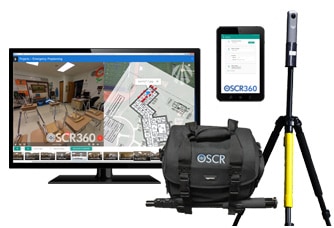
OSCR360 is a tool to help administrators and safety teams easily train on, create and implement their school safety plans. The System allows users to visualize emergency evacuation and reunification scenarios, making training staff simple. Built using 360-degree images, blueprints, and your school’s key documentation, OSCR360 projects are easy to customize and share with school staff and first responders.
Logistically, it can be challenging and tedious to prepare detailed plans with a group. For instance, identifying hardened corners typically requires planners to physically visit each classroom and review the layout. Using OSCR360, however, each location can be visited virtually and viewed alongside blueprints, without ever leaving a meeting room.
Training large groups of people also presents challenges. On-site training during the school day disrupts student learning, but it is difficult to find time outside of school hours when the building is unoccupied by athletic or extracurricular events. Working around law enforcement shifts and schedules is even more complex.
OSCR360 conveniently allows groups, large and small, to virtually train anytime, anyplace. Police officers can familiarize themselves with the school layout and review tactical strategies from the convenience of headquarters or even their patrol vehicles. Teachers can learn escape routes and virtually visit the reunification site during staff meetings. Buildings and grounds staff can identify the locations and procedures for critical utility shutoffs. The possibilities are endless.
Implementing a multi-tiered approach to school safety
No matter where your school is in the process of implementing its safety measures, L-Tron is here to help. Founded in 1975, we have partnered with law enforcement and government agencies for over two decades. We are happy to share how other schools are utilizing OSCR360 to build and organize their safety plans or walk you through a virtual demo of the software.